
DIY Business Growth Versus Expert Strategy
 Entrep Admin
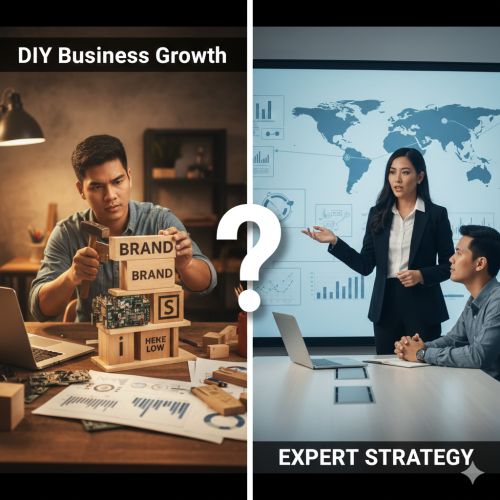 Owners must choose a path for business development. They often debate handling growth in-house or seeking external expertise. Building your business yourself offers significant advantages. You maintain complete control over every decision and action. This hands-on approach builds intimate knowledge of your market. Furthermore, managing all processes saves considerable money initially. You avoid the high fees consultants charge for specialized services. This strategy works well for companies with tight budgets.
The Power of Do-It-Yourself Development
DIY development truly fosters deep learning. You learn every nuance of your operation first-hand. This deep understanding becomes a massive asset later. You can quickly adapt to unforeseen market changes. Also, all team members directly contribute to the strategy. This shared ownership creates a stronger internal culture. The entire team feels invested in the ultimate success.
Cost Control and Budgeting: You directly control all expenses.
Flexibility and Agility: You can pivot your plan instantly.
Intimate Market Knowledge: You know your customers best.
Skill Building for Staff: Employees gain valuable new expertise.
Financial savings represent a key factor. Consultants charge hefty hourly rates or project fees. A strategic planning package might cost tens of thousands of dollars. New businesses frequently cannot afford this expense. Therefore, a DIY approach becomes a financial necessity. It allows capital allocation to core business functions. You can invest more in product development or crucial inventory.
This method also grants unmatched operational control. You implement changes without external approvals. Decisions happen fast, enabling rapid market response. A consultant’s engagement typically follows a fixed timeline. This structure can slow down essential execution. You avoid unnecessary bureaucratic hurdles completely.
The Value of External Strategists
Hiring a business strategist brings specialized outside expertise. Consultants possess broad experience across many industries. This wide perspective offers fresh, unbiased viewpoints. They identify blind spots an internal team misses easily. Crucially, strategists bring proven frameworks and methodologies. They streamline the planning process significantly.
Objective Perspective: Experts see what internal teams miss.
Proven Methodologies: They use efficient, tested strategies.
Accelerated Growth: Experience can speed up market entry.
Specialized Knowledge: Consultants offer industry-specific insights.
They significantly accelerate growth. Strategists know the fastest routes to market expansion. Their established networks open new doors for partnerships. They use data to craft highly effective plans. This data-driven approach minimizes significant risk. Businesses gain immediate access to top-tier strategic thinking.
Time savings offer a major benefit as well. The business owner can focus completely on daily operations. The strategist handles all long-term planning and analysis. This separation of duties optimizes resource use. The internal team continues serving existing clients smoothly. Consultants work efficiently, adhering to strict deadlines.
Weighing Control Against Expertise
DIY business development emphasizes control and cost. It builds internal capabilities and strong learning. Conversely, hiring a strategist prioritizes speed and expertise. It buys experience and objective insight instantly. You trade potential long-term skill-building for immediate, focused results.
Consider the complexity of your goal. A simple local expansion suits a DIY model best. Entering a new international market suggests hiring an expert. The magnitude of the challenge dictates the optimal path. Specifically, complex regulatory hurdles demand specialized knowledge.
Evaluate your current internal resources. Does your team have the time for strategic planning? Do existing staff members possess the necessary skills? If resources are limited, a consultant provides immediate capacity. Attempting DIY development with insufficient resources risks failure.
The Learning Curve and Cost
The DIY approach forces a steep learning curve. Mistakes are inevitable parts of the process. These errors become valuable, hard-won lessons. However, mistakes also consume significant time and resources. The learning phase can slow down overall momentum.
Hiring a strategist minimizes initial errors. Professionals avoid common pitfalls quickly. This efficiency often justifies the higher upfront cost. Ultimately, the decision depends on your capital. It also rests on your desired speed of execution.
A business may choose a hybrid approach too. Hire a strategist for initial planning and strategy development. Then, the internal team takes over the execution phase. This approach transfers expertise to your staff. It leverages expert knowledge while maintaining long-term control. Therefore, you maximize both learning and immediate results.
Finalizing the Best Development Route
Determine your budget’s absolute capacity first. Assess the skill level and availability of your team. Define your growth objectives clearly and precisely. A clear vision makes the path obvious. Young businesses with limited funds should choose DIY. Established firms seeking rapid, complex change should hire a strategist. Every business must choose its unique journey. This choice profoundly shapes its future trajectory.
You Might Also Like:
 One-Person Corporation and Sole Proprietorship in the Philippines
 Build your own Website
 Strategy Implementation and Monitoring
This Post Has 0 Comments